Keep up to date.
Subscribe to get the latest news and trends in your inbox.
insights & news > Insights
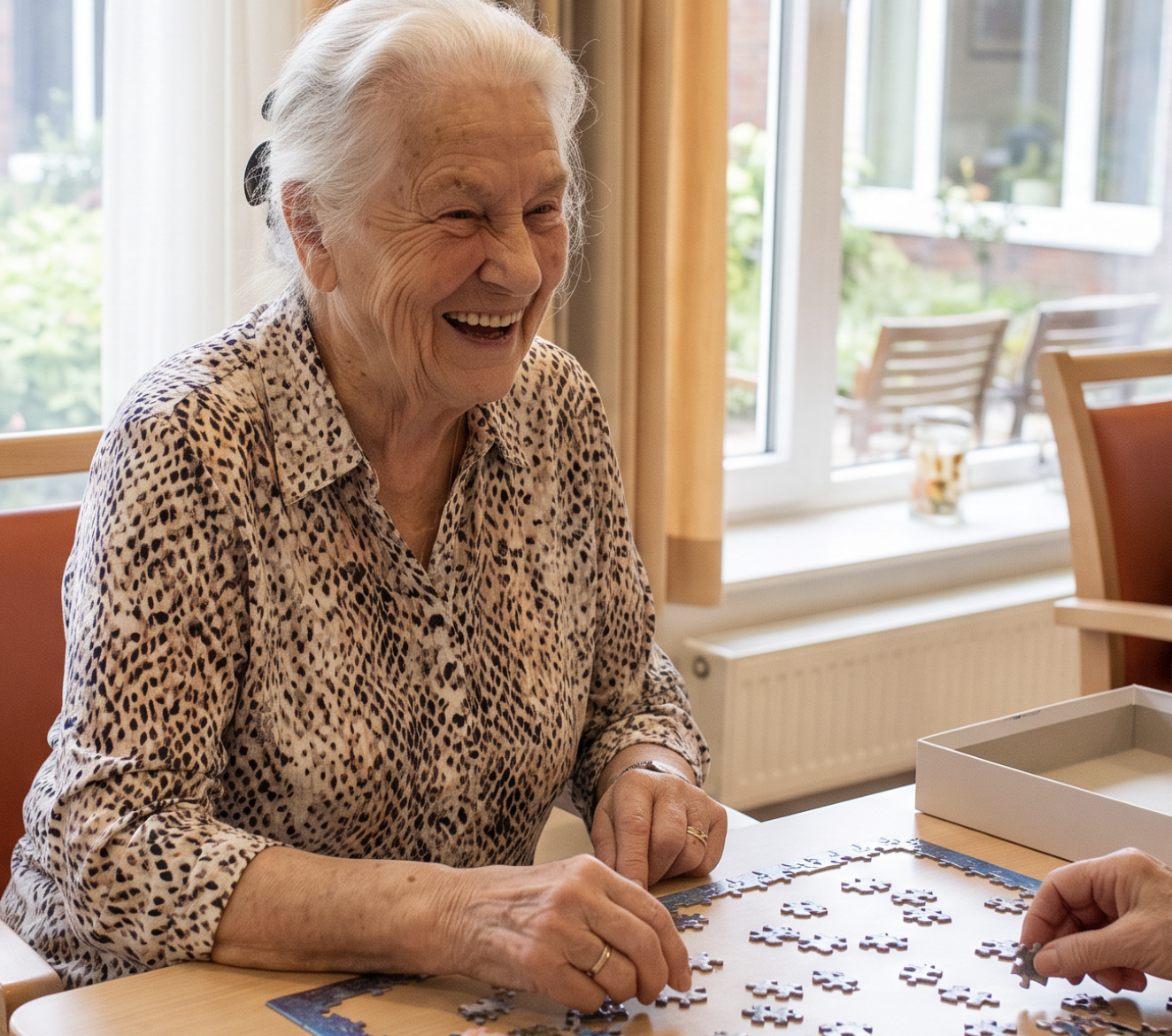
Healthy ageing is about much more than preventing illness.
For people living in elderly care, assisted living, nursing homes, and senior living communities, wellbeing is shaped by everyday experiences: staying physically active, eating well, maintaining relationships, taking part in meaningful activities, and having a sense of independence and control.
This is where patient engagement and resident engagement become increasingly important.
The World Health Organization defines healthy ageing as developing and maintaining the functional ability that enables wellbeing in older age. That means care should look beyond individual diseases and consider a person’s physical and mental capacities, as well as the social and physical environment around them. World Health Organization: Healthy Ageing
For care providers, this raises an important question:
How can technology and better engagement help residents stay healthier, more active, and more connected?
Patient engagement traditionally refers to people taking an active role in their healthcare, from understanding information and asking questions to participating in decisions about their care. The Agency for Healthcare Research and Quality describes engagement as a continuum that can move from basic participation towards activation and greater ownership of health decisions. Agency for Healthcare Research and Quality: Patient and Family Engagement
In residential care, the same principle can be applied more broadly as resident engagement.
It means helping residents participate in their everyday lives and care in ways that reflect their abilities, preferences, interests, and goals.
That could mean choosing an activity, joining a group exercise session, contacting family, accessing health information, requesting a service, or simply deciding what they would like to do that day.
The goal is not to make residents responsible for managing their own care. It is to create an environment where they can remain involved, informed, active, and socially connected.
Physical activity is one of the foundations of healthy ageing.
WHO recommends that adults aged 65 and over should generally aim for at least 150 minutes of moderate physical activity per week, with additional balance-focused activity for older adults with poor mobility to help prevent falls. WHO also emphasizes that older people who cannot meet the full recommendations should still be as active as their abilities and health conditions allow. World Health Organization: Physical Activity
For residents in long-term care, this can be challenging.
Research shows that people living in residential care often have relatively low levels of physical activity. At the same time, a large systematic review and meta-analysis involving 147 studies and more than 11,600 participants found that exercise interventions were associated with improvements in overall physical function among older adults in residential care. PubMed: Exercise interventions in residential aged care
This is why engagement matters.
An activity programme is only useful when residents know what is happening, understand how to participate, and feel motivated and able to take part.
A digital screen in a resident's room or a shared area can support that process by displaying activity schedules, reminders, exercise videos, event information, or personalised messages.
Technology does not create physical activity by itself. It can, however, reduce the distance between knowing an activity exists and actually taking part in it.
Physical health is only one part of the equation.
Social connection is equally important to the wellbeing of older adults. WHO identifies loneliness and social isolation as important determinants of health and reports that around 11.8% of older people experience loneliness globally. The organisation also notes that loneliness and social isolation can affect physical and mental health, quality of life, and longevity. World Health Organization: Reducing Social Isolation and Loneliness Among Older People
The Swedish context reflects the importance of the issue. In its 2025 report on care for older people, Socialstyrelsen reported that 15% of older people in residential care experienced loneliness often, compared with 10% among older people receiving home care in ordinary housing. Socialstyrelsen: Vård och omsorg om äldre 2025
For care providers, this means that social engagement should not be treated as an optional extra.
Family video calls, group activities, cultural content, games, music, news, religious or community programming, and simple opportunities for communication can all contribute to a more connected daily experience.
Research into social interventions for nursing home residents has found positive trends in social and health-related outcomes, although the evidence base remains diverse and limited. More recent research has also found associations between social participation interventions and improved quality of life in residential aged care. PubMed: Social interventions for nursing home residents
The important distinction is that technology should support human connection rather than attempt to replace it.
Healthy ageing is not only about exercise.
WHO identifies diet and physical activity as important determinants of health, wellbeing, functional ability, mobility, and independence in older age. Healthy diets also help protect against malnutrition and a range of noncommunicable diseases. World Health Organization: Nutrition and Healthy Lifestyle
In residential care, food is also part of the resident experience.
Digital engagement can make information about meals, menus, dietary options, activities, and daily schedules easier to access. It can help residents see what is available without having to rely entirely on staff to provide the information.
That can seem like a small change, but small moments of choice matter.
A resident who can see the day's menu, choose an activity, call a family member, or access information independently is participating in their environment rather than simply receiving services from it.
That is at the heart of person-centred care.
One of the biggest challenges in resident engagement is not a lack of information. It is making information accessible, understandable, and actionable.
A noticeboard may contain an activity schedule. A staff member may mention an event during a conversation. A family member may send a message. But residents may not remember the information or may not see it at the moment when they are deciding what to do.
Digital engagement channels can help close that gap.
A resident-facing screen can provide activity and event reminders, exercise and wellbeing content, meal and menu information, messages from staff, video calls with family and friends, local news and community information, entertainment and educational content, and service requests.
The value is not simply having more content.
It is making the right information available in the right place, in a format residents can actually use.
Not every resident interacts with technology in the same way.
Older adults are a highly diverse group. WHO emphasizes that there is no typical older person and that people differ significantly in their physical and mental capacities, experiences, interests, needs, and resources. World Health Organization: Meaningful Engagement of Older People
That makes accessibility central to resident engagement.
Interfaces should be simple to understand and easy to navigate. Information should be presented clearly. Content should take different levels of vision, hearing, mobility, cognitive ability, and digital confidence into account.
Research into digital technology and social wellbeing has found that technology can help reduce social isolation, but the benefits depend on factors such as accessibility, training, support, and how interventions are implemented. PubMed: Digital Technology and Social Wellbeing in Older Adults
In other words, good resident engagement technology should feel easy, not technical.
For many residents, wellbeing is closely connected to relationships outside the care setting.
Distance, mobility issues, work, and busy family lives can make regular visits difficult. Video communication can provide another way for residents to maintain relationships between physical visits.
This is an area where research into digital interventions is encouraging but should be interpreted carefully. Systematic reviews have found that digital technologies can improve social connectedness for older adults, particularly when they facilitate existing relationships, but outcomes depend on the design and implementation of the intervention. PubMed: Digital Interventions and Social Connectedness in Older Adults
For care providers, the lesson is practical:
Make it easy for residents to stay connected to the people who matter to them.
A video call should not require complicated technology or several steps. The easier communication becomes, the more naturally it can become part of everyday life.
Resident engagement is not only about the resident.
Care teams are under pressure, and digital tools can help staff communicate information, coordinate activities, and reduce some routine tasks.
Socialstyrelsen's work on welfare technology in Sweden highlights the potential for digital tools to support quality and resource efficiency when technology is introduced according to individual needs and followed up systematically. The agency also emphasizes that adoption and use vary considerably between municipalities. Socialstyrelsen: Use of Welfare Technology in Health and Social Care
That last point is important.
Buying technology is not the same as improving care.
A resident engagement platform should be evaluated according to whether it actually helps residents participate, communicate, stay informed, and maintain their wellbeing.
A practical approach can be built around five principles.
Understand what residents actually need and want.
Ask what information they struggle to access, which activities they value, how they communicate with family, and where they want more independence.
WHO's current ICOPE guidance emphasizes person-centred assessment, identifying individual support needs, and developing personalised care plans. World Health Organization: ICOPE Guidance on Healthy Ageing
Use communication channels to make activities, exercise, meals, social events, and wellbeing resources visible and easy to access.
The objective is not to tell residents what they should do. It is to remove unnecessary barriers to participation.
Resident engagement should not depend on a single annual survey or occasional conversation.
Create regular opportunities to communicate with staff, family, friends, and the wider community.
Technology should work with existing workflows, not create another layer of complexity.
In-room TVs, tablets, digital signage, and other resident-facing devices can become engagement points when they are integrated into the care environment and designed around the resident experience.
Track more than logins or screen usage.
Useful measures can include participation in activities, communication with family, resident satisfaction, staff feedback, and other indicators that reflect the goals of the implementation.
Socialstyrelsen's research on welfare technology similarly highlights the importance of systematic follow-up and evaluating whether technology actually produces better quality or resource outcomes. Socialstyrelsen: Use of Welfare Technology in Health and Social Care
The strongest case for technology in elderly care is not that a screen can make someone healthy.
It cannot.
What technology can do is create a more supportive environment around the resident.
Hibox Smartroom Care, for example, brings entertainment, communication, information, messaging, video calls, and resident services together through managed TVs and other connected displays. The platform is designed for assisted living, elderly care, and home care environments. Hibox Smartroom Care
That type of technology can help turn an in-room screen from a passive entertainment device into a resident engagement channel.
It can remind a resident about an exercise session.
It can make it easier to call a daughter or grandson.
It can display today's menu.
It can provide information about an upcoming event.
It can deliver a message from staff.
These are small interactions, but together they can help create a more connected and participatory care environment.
Keeping residents healthy, mentally and physically, requires more than clinical care.
It requires environments that encourage movement, support nutrition, strengthen social connection, provide meaningful activities, and give people opportunities to remain involved in their own lives.
This is where patient engagement evolves into resident engagement.
The role of technology is not to replace carers or human relationships. It is to make information easier to access, communication easier to maintain, and participation easier to achieve.
The best digital tools should ultimately become almost invisible.
Residents should not think about the technology.
They should simply experience a care environment that feels more connected, informative, accessible, and responsive to their needs.
That is what meaningful resident engagement looks like.
Patient engagement in elderly care means supporting older people to participate actively in decisions, communication, activities, and aspects of their daily care. In residential settings, the term resident engagement is often more appropriate because it covers wellbeing and everyday participation as well as clinical care. Agency for Healthcare Research and Quality: Patient and Family Engagement
Technology can support resident wellbeing by making communication, information, entertainment, social connection, and daily services easier to access. Evidence suggests digital interventions can help improve social connectedness, although effectiveness depends on accessibility, implementation, and the individual needs of residents. PubMed: Digital Technology and Social Wellbeing in Older Adults
Social connection is an important part of physical and mental wellbeing. WHO identifies loneliness and social isolation as factors associated with poorer health, quality of life, and longevity. World Health Organization: Reducing Social Isolation and Loneliness Among Older People
Care homes can make physical activity more accessible through structured exercise, balance activities, mobility support, reminders, and engaging residents in activities suited to their abilities. Research in residential care indicates that exercise interventions can improve physical function. World Health Organization: Physical Activity PubMed: Exercise interventions in residential aged care
No. Digital technology is best used to complement human interaction. Its role is to make communication, information, and participation easier while supporting the relationships between residents, families, and care professionals. PubMed: Digital Interventions and Social Connectedness in Older Adults
tags
Share this article


Subscribe to get the latest news and trends in your inbox.

