Keep up to date.
Subscribe to get the latest news and trends in your inbox.
insights & news > Insights
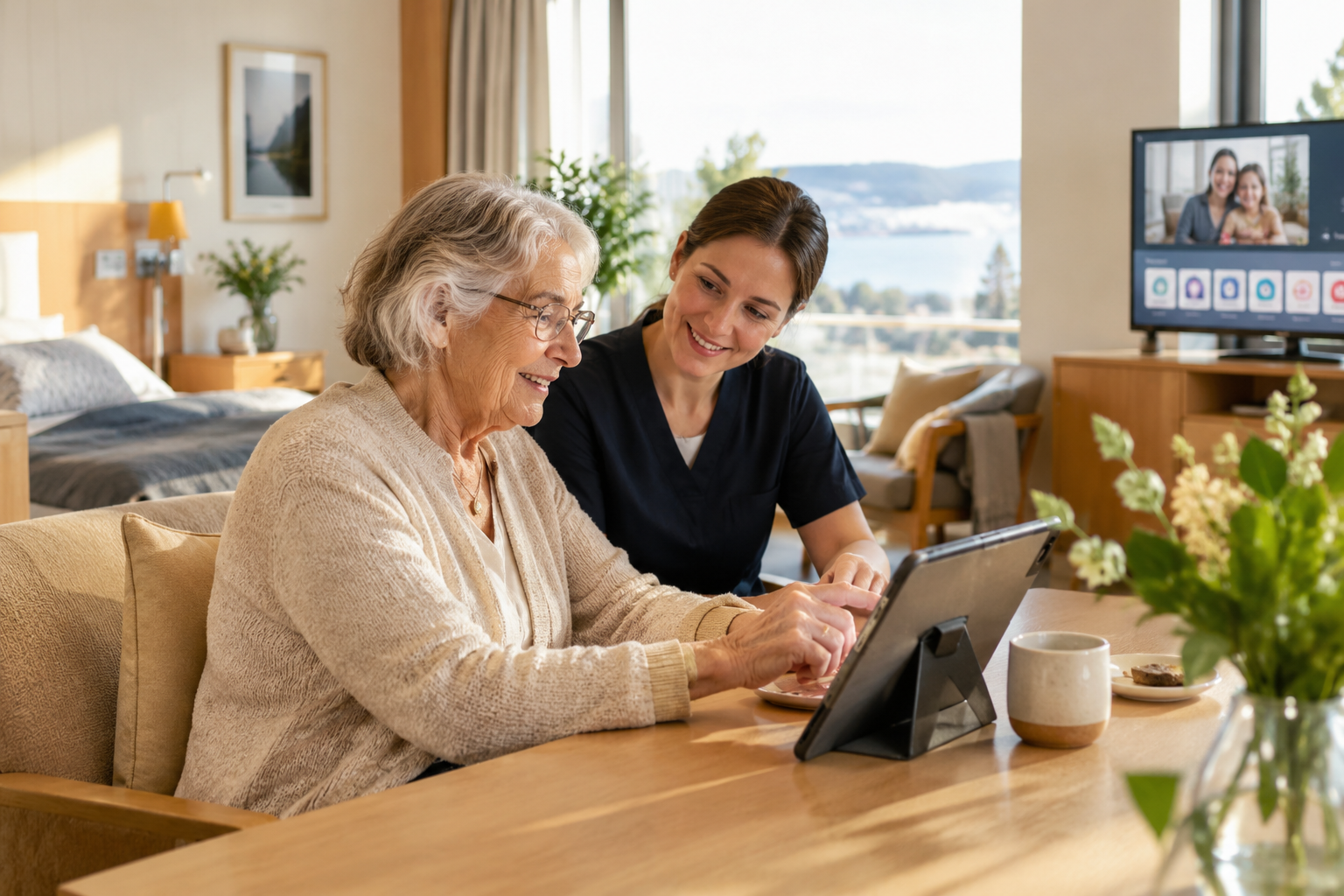
The future of elderly care will be shaped not only by demographic change, but also by changing expectations. As today's digitally connected generations grow older, care homes will increasingly need to consider how technology supports residents' communication, entertainment, access to information and independence.
The next generation of elderly-care residents may expect more from technology than many care facilities currently provide. For care providers, this is an opportunity to rethink how digital services are integrated into everyday life while keeping care personal, accessible and centred on individual needs.
Sweden's population is ageing. According to Statistics Sweden (SCB), people aged 80 and over accounted for around 6% of the population in 2025, a share projected to reach 11% by 2070.
But demographic change is only part of the picture. The people entering care facilities over the coming decades will have different life experiences from many residents today, including greater exposure to smartphones, digital communication, streaming services and online information.
In Sweden, Internetstiftelsen's 2025 internet report documents widespread internet use and increasingly established digital habits across generations. As digitally experienced cohorts grow older, care providers should expect a wider range of expectations around how residents access information, communicate and spend their time.
Technology should therefore be part of long-term elderly-care planning, not simply something introduced when a need arises.
Today's digital services have shaped expectations around convenience and control. People routinely use their phones to communicate with family, watch entertainment, access information and manage everyday tasks. Some will want to retain these habits when they move into residential care.
Future residents may expect straightforward ways to make video calls, access familiar content, find daily schedules, view menus, receive messages and discover activities. They may also expect a more personalised experience, with technology that adapts to their preferences rather than requiring them to navigate complicated systems.
This does not mean every resident will want more technology. It means care providers should be prepared for a wider range of preferences and expectations.
The World Health Organization's guidance on age-friendly environments emphasises the importance of environments that help older people remain active, connected and independent. Digital services are increasingly part of that environment.
Greater familiarity with technology will not eliminate the digital divide. Ageing can affect vision, hearing, mobility and cognitive abilities, while digital skills and confidence vary significantly between individuals.
The OECD's research on digital skills for seniors highlights barriers that can limit older adults' access to digital services and social connections. This underlines the importance of designing technology around people's circumstances and capabilities.
The challenge for care homes is to offer more advanced digital experiences without making everyday life more complicated for residents who need additional support.
The answer lies in accessible design. Interfaces should be intuitive, information should be easy to read, and common tasks should require as few steps as possible. Residents should also have appropriate support and non-digital alternatives when technology is unsuitable or unwanted.
The objective is not to make every resident digitally independent. It is to make technology useful and accessible to those who choose or need it.
Care providers can begin preparing for changing resident needs in four practical areas:
These capabilities should not be treated as isolated features. Together, they can create a digital environment that supports residents throughout the day.
In-room TVs, tablets and shared displays can provide practical ways to make digital services part of everyday care. Rather than acting only as entertainment devices, they can become access points for information, communication and resident engagement.
However, preparing for future resident expectations requires looking beyond individual devices. The digital environment also needs reliable infrastructure, appropriate security and connected services that work across reception, common areas, dining spaces, corridors, resident rooms and bedside environments.
This broader approach is reflected in the connected digital environment for elderly care, which brings together resident-facing technology, communication and digital services with the underlying cloud and IT operations needed to support them.
Hibox's Smartroom Care solutions provide information, entertainment and communication through managed TVs and displays in residential and elderly-care settings. Services such as CareCall are designed to help residents maintain contact with family and friends through supported devices.
For care providers, the value lies not simply in installing screens, but in making useful services easy to access, accessible to different residents and manageable across the facility. Any solution should fit staff workflows, meet appropriate security and privacy requirements, and be evaluated against residents' actual needs.
The next generation of elderly-care residents will not all have the same technological needs. Some will expect familiar digital services, others will prefer simpler interactions, and many will move between these needs as their circumstances change.
Care providers should review their digital strategy before existing systems become a limitation. That means involving residents and staff in planning, assessing current systems, identifying accessibility and communication gaps, and choosing technology that can evolve over time.
The future of elderly care is not about making facilities more technological for its own sake. It is about ensuring that technology continues to serve the people who live there.
The most future-ready care homes will combine human care with accessible, flexible digital experiences, giving every resident more opportunities to connect, participate and maintain independence.
As more digitally experienced generations enter residential care, providers may see greater expectations for easy communication, personalised entertainment, accessible information and familiar digital services. Individual preferences and abilities will still vary.
Care homes should consider accessible resident communication, video calling, digital activity schedules, information displays, entertainment services and centrally managed devices. The right combination depends on residents' needs, staff workflows and the facility's infrastructure.
Residents differ in their digital skills, sensory abilities, mobility and cognitive capacity. Accessible technology helps make services easier to use, while appropriate support and non-digital alternatives ensure that residents are not excluded.
Providers can involve residents and staff in planning, assess existing systems, identify accessibility and communication gaps, and invest in flexible technology that can evolve with residents' needs.
A connected environment helps resident-facing devices, communication services and underlying IT infrastructure work together across the facility. This can make services easier to manage and provide a more consistent experience for residents, staff and families.
Learn more: Explore Hibox solutions for elderly and residential care.
tags
Share this article


Subscribe to get the latest news and trends in your inbox.

