Keep up to date.
Subscribe to get the latest news and trends in your inbox.
insights & news > Insights
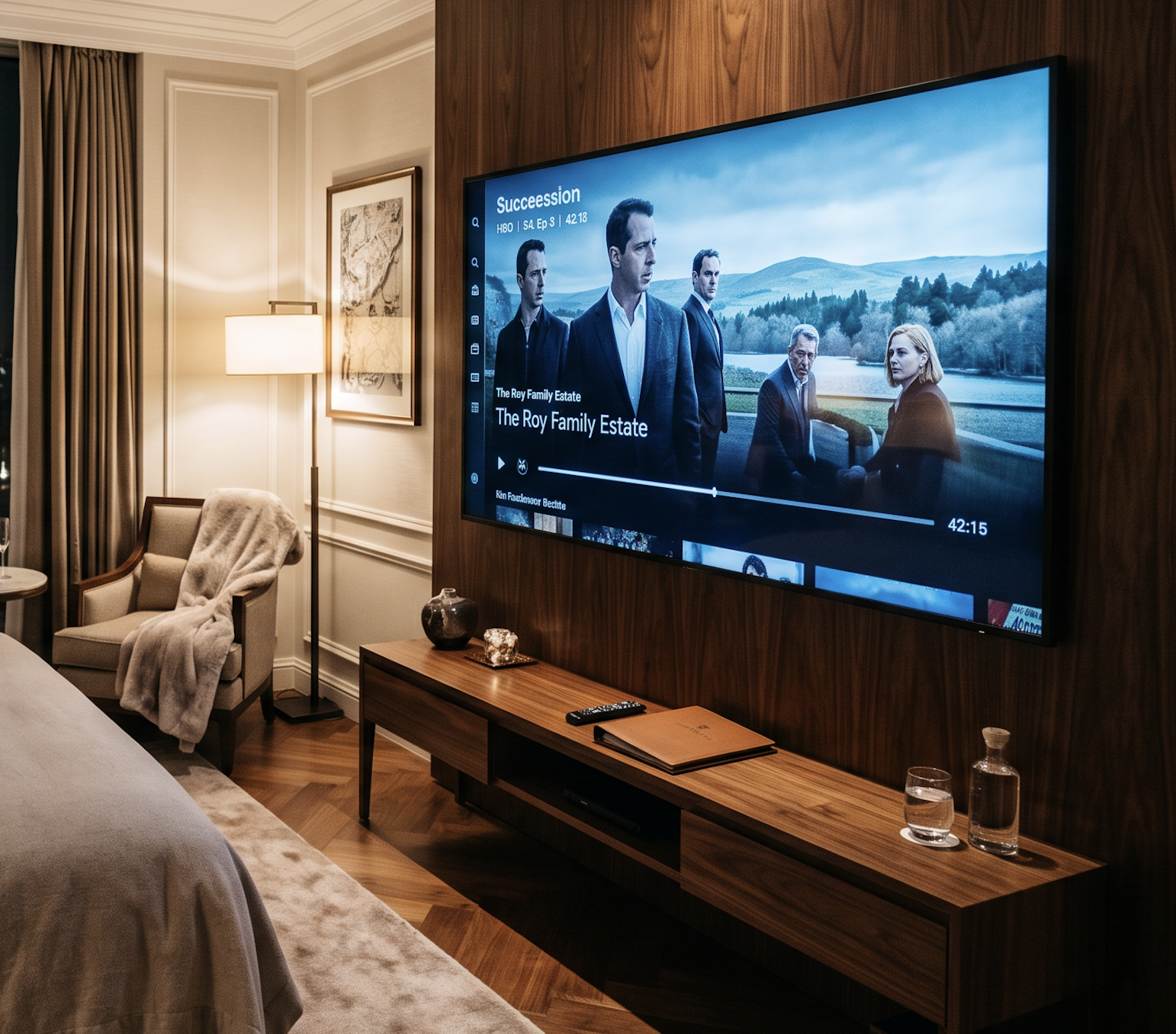
The Hotel Room Is Your MostUnderused Guest Engagement Channel
Hotels invest considerable resources in attracting guests. They optimisetheir booking websites, manage online reviews, develop loyalty programmes andrefine the arrival experience. Yet once a guest reaches their room, one of thehotel's most direct communication channels is often used primarily for watchingtelevision.
This represents an opportunity to rethink the role of the hotel room.
The in-room experience is not simply the final step in the bookingjourney. It is where guests decide how to spend their time, which hotelservices to use and what experiences to book. It is also where questionsnaturally arise. What time does breakfast start? Is there a table available atthe restaurant? Can a spa treatment be booked for the afternoon? How can aguest request additional towels without calling reception?
For hotels, the challenge is not necessarily a lack of services. It ismaking those services easy to discover and access throughout the stay.
The guest experience continues longafter check-in
A hotel's digital guest journey usually receives the most attentionbefore arrival, when guests compare properties, make reservations and receiveconfirmation emails. However, the experience continues well beyond the bookingprocess.
In its research on the changing hotel guest experience, Deloitte describes how hotels must combinetraditional, high-touch hospitality with the immediate convenience guestsincreasingly expect from digital services. The implication is that technologyshould not simply add another interaction. It should make the existingexperience easier and more relevant.
Consider a guest who arrives after a long journey. They may want dinner,information about the hotel or a way to contact reception. If the relevantinformation is difficult to find, the guest must spend time navigating menus,searching online or calling staff.
Now imagine that the same information is available directly on thetelevision or tablet in the room. The guest can explore the restaurant, checkservice information and make a request without leaving the room or searchingfor a separate application.
The difference is not the amount of information available. It is howeasily the guest can access it.
Rethinking the role of the in-room TV
For decades, the hotel television has been treated primarily as anentertainment device. That role remains important, but connected hotel TVsystems can support a much broader experience.
Research published in the International Journal of HospitalityManagement has examined the factors influencing guests' acceptance of smarthotel technology, including perceived usefulness and ease of use. The findingsreinforce an important principle for hotel operators: smart technology needs to be useful and straightforward tointeract with.
This is where the in-room TV can become more valuable. Instead offunctioning only as a source of entertainment, it can provide access to hotelinformation, services, communication and relevant content through a familiarinterface.
Hibox Smartroom, for example, combines hotel television, streaming andcasting functionality, personalised interfaces, PMS integration and centralisedadministration. Through Hibox's hospitality solutions, hotels can createan in-room digital experience that reflects their own services and brand.
The practical possibilities are straightforward. Guests can accessinformation about facilities, explore available services and use supportedfunctions directly from their room. With a connected in-room tablet, theexperience can extend further to service requests, restaurant reservations andspa bookings.
The objective is not to make every possible function available on asingle screen. It is to give guests a convenient starting point for interactingwith the hotel.
From discovering services to usingthem
Many hotels offer services that guests never use during their stay. Aguest may be interested in a spa treatment but not know how to book one.Another may want to order room service but find the ordering processinconvenient. A third may not realise that the hotel offers late checkout orlocal experiences.
These situations illustrate the difference between making a serviceavailable and making it accessible.
A brochure, welcome email or notice in the lift can communicate what thehotel offers. However, guests must still remember the information, find therelevant contact details and complete the necessary steps.
A digital guest interface can bring these steps closer together. Guestsexploring the hotel's facilities can move from information to a supportedbooking or service request without switching between several communicationchannels.
Hibox's Smartroom Tablet solution is designed around thisprinciple, providing access to guest services, communication, entertainment andordering functions through an in-room device.
For hotel operators, this creates an opportunity to make existingservices easier to use. It may also create additional revenue opportunities,although the commercial impact will depend on the property, its guests and howthe solution is implemented.
Better engagement should not mean moremarketing
There is an important distinction between useful digital communicationand continuous promotion.
Guests do not need every screen to become an advertising channel. Toomany irrelevant messages can make digital interfaces feel cluttered and reducetheir usefulness.
The strongest approach is to prioritise what helps guests navigate theirstay. Information about breakfast, facilities, service availability and localexperiences should be clear and easy to find. Promotions can be included wherethey are relevant to the hotel's offering, but they should not overwhelmessential information.
This approach also protects the human side of hospitality. Technologyshould make it easier for guests to interact with staff when they needassistance, not create unnecessary barriers to personal service.
The Cornell SC Johnson College of Business hasexplored how in-room technology can give guests convenient access to serviceswhile supporting operational efficiency. Its central lesson remains relevant:digital convenience and human hospitality do not have to compete.
Connecting the guest experience withhotel operations
An in-room screen can improve the guest experience, but its value isgreater when it forms part of a connected operation.
A service request may need to reach reception, housekeeping ormaintenance. A room status update may affect housekeeping and front-deskdecisions. A purchase may need to be recorded against the guest's room.
If these activities remain disconnected, the guest may still experiencedelays even when the interface itself is easy to use.
Hibox also provides hotel housekeeping software that supports tasktracking, issue reporting and PMS integration. Connecting guest-facingtechnology with operational workflows can help hotels reduce information gapsbetween the guest and the teams responsible for delivering the service.
The underlying principle is simple: better engagement requires both anaccessible guest interface and an operation capable of responding to it.
How hotels can measure the value
Introducing a new digital channel should not be considered a successsimply because it has been installed. Hotels should evaluate whether itimproves the experience and supports their operational objectives.
Useful measures might include how often guests access serviceinformation, how many requests are completed digitally, how long it takes tofulfil requests, which services receive more engagement and how guests evaluatethe experience.
Hotels can also compare guest feedback and relevant operationalindicators before and after implementation. Where additional revenue is anobjective, uptake of optional services can be measured separately from guestsatisfaction.
These measures help operators understand which functions are useful andwhere the experience needs improvement.
The room is more than a place to sleep
The hotel room is one of the few environments where a property canprovide information, entertainment and access to services throughout theguest's stay. Treating the room as an active engagement channel allows hotelsto build a more connected experience without making the stay feel morecomplicated.
Hibox's approach to hotel TV, casting, in-room tablets and staff workflowsreflects this broader opportunity: the guest-facing technology and the systemssupporting hotel operations can work together to make the stay easier tonavigate.
The important question is not whether a hotel should put more technologyin the room. It is whether the technology makes the guest's experience better.
When the answer is yes, the in-room screen becomes more than anentertainment device. It becomes a practical connection between the guest andeverything the hotel has to offer.
Frequently Asked Questions
What is hotel guest engagement?
Hotel guest engagement refers to the ways guests interact with a propertythroughout their stay, including accessing information, requesting services,communicating with staff and exploring hotel facilities. Digital engagementchannels can make these interactions easier to access.
How can an in-room TV improve theguest experience?
An interactive hotel TV can provide entertainment, property informationand access to supported hotel services. When integrated with other hotelsystems, it can also help guests make requests and navigate the property moreconveniently.
Can in-room technology increase hotelrevenue?
It can create opportunities by making additional services easier todiscover and book. The actual impact depends on the hotel's service offering,guest behaviour, implementation and how results are measured.
Does digital guest engagement replacepersonal service?
No. Its role is to make information and routine services easier to accesswhile preserving staff availability for situations where personal attention andhospitality matter most.
tags
Share this article


Subscribe to get the latest news and trends in your inbox.
.svg)