Keep up to date.
Subscribe to get the latest news and trends in your inbox.
insights & news > Insights
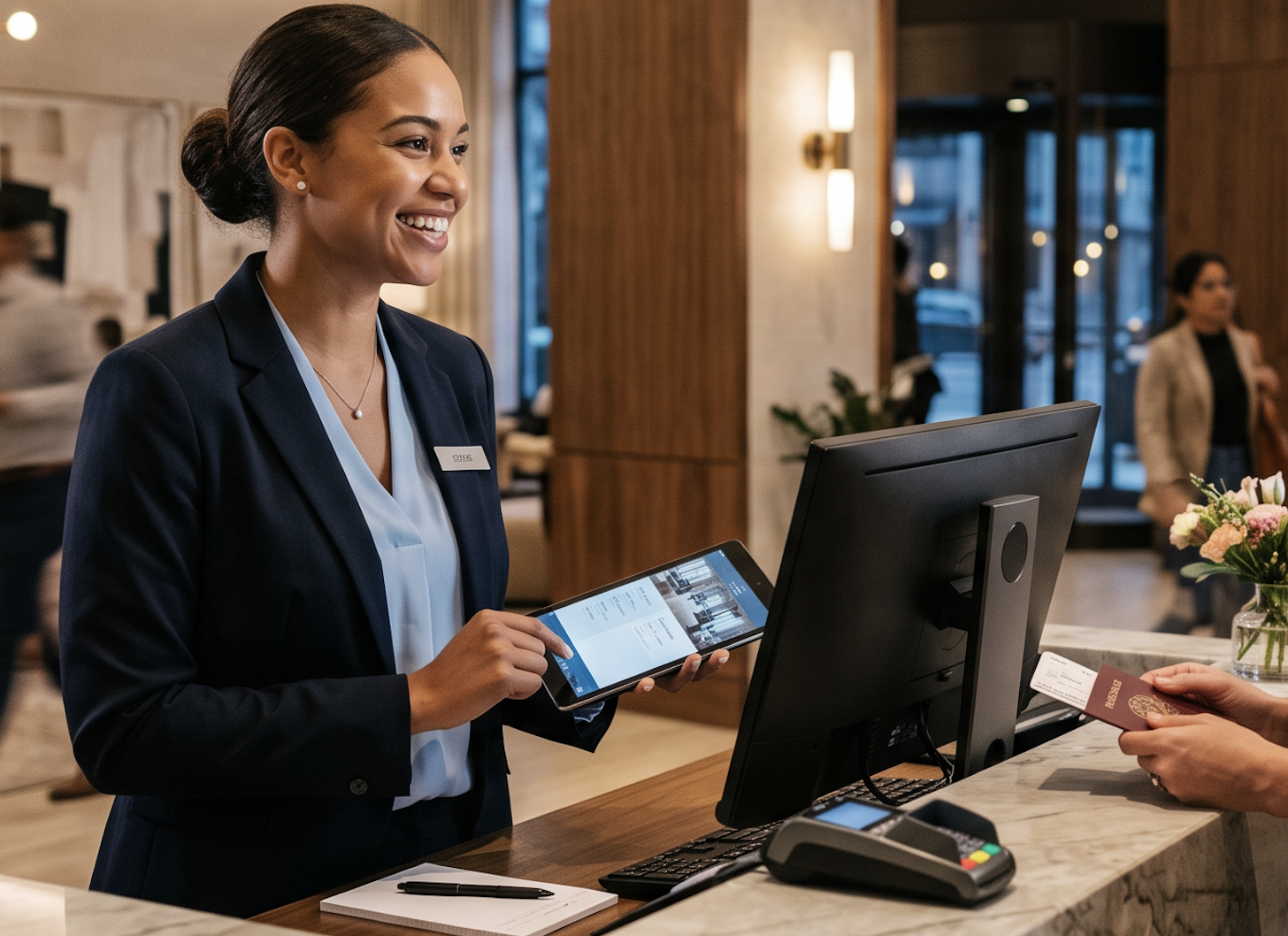
Every hotel operator knows the number that matters most isn't the room rate: it's what happens after check-in. Spa bookings, room service, late checkouts, minibar sales, tours, parking upgrades: secondary spend is often the difference between a break-even stay and a genuinely profitable one. Yet most hotels still treat the time between key handover and checkout as a black box, hoping guests will find their way to the spa menu or remember the pool bar exists.
There's a useful parallel in an industry that has spent the last decade obsessing over exactly this problem: healthcare. Patient engagement technology emerged from a simple realization, that a patient who understands their care plan, feels informed, and can act on relevant information at the right moment has better outcomes and a better experience. Hospitals invested heavily in in-room screens, apps, and notifications not to sell more, but to close the gap between "we told them once at admission" and "they actually know what's available and when to use it."
Hotels have the same gap, just with a commercial upside instead of a clinical one.
The Problem Isn't Awareness, It's Timing
Most guests do, in fact, know a hotel has a spa or a restaurant. What they don't know is whether there's a table free tonight, whether the spa has a last-minute slot, or that the rooftop bar does a sunset happy hour they'd genuinely enjoy. A brochure in the room or a line in the welcome email delivers information once, at a moment when the guest is distracted by unpacking, jet lag, or Wi-Fi passwords. It rarely delivers it again at the moment the guest is actually deciding what to do next.
This is the core insight patient engagement platforms figured out: the value isn't in the information itself, it's in surfacing the right piece of it at the right moment, through a channel the person is already looking at. For a patient, that's often the in-room television, already on, already trusted, already part of the routine. For a hotel guest, the parallel is almost exact.
The In-Room Screen as an Engagement Hub, Not a Broadcast Device
Television in hotel rooms has historically been treated as a one-way amenity: cable channels, maybe a welcome video on a loop. But a screen that's already part of the guest's environment can do far more: show real-time availability at the restaurant, let a guest book a spa treatment without picking up the phone, surface a late-checkout offer on the morning they're most likely to want one, or suggest an experience based on the length or purpose of their stay.
None of this requires being intrusive. The lesson from healthcare engagement design is instructive here too: the best systems are the ones patients barely notice as "technology," they just feel like relevant information showing up when needed. The moment an engagement channel feels like a sales pitch, guests tune it out entirely, and secondary spend opportunities go with it. The goal is relevance and convenience, not frequency of offers.
Removing Friction Is Worth More Than Adding Incentives
Hotels often try to lift secondary spend through discounting: 10% off the spa, a bundled dinner package. These can work, but they leave real revenue on the table because they assume the barrier is price. Often the actual barrier is friction: not knowing what's available, not wanting to call the front desk, not knowing if a reservation is even needed.
Reducing the number of steps between "guest has a thought" and "guest completes a booking" tends to outperform discounting. A guest who can book a table in two taps from their room, at 6:45pm, is far more likely to spend than one who has to first find a number, then call, then wait on hold. This is the same principle behind patient portals that let someone request a prescription refill in seconds rather than through a phone tree: remove the friction, and uptake follows.
Data Should Inform Offers, Not Just Track Them
The most effective engagement platforms, clinical or hospitality, treat guest data as a way to improve relevance over time, not just as a reporting dashboard. A guest who orders room service every evening at 7pm doesn't need a push notification about the buffet lunch. A family with young children checking in for a week is a better spa lead on day one than day five. Small signals, used well, make every subsequent offer feel more like a helpful suggestion and less like marketing.
The Real Opportunity
Secondary spend isn't really a sales problem. It's an information and timing problem, and the hospitality industry has more in common with modern healthcare engagement than it might expect. Guests aren't reluctant to spend, they're simply navigating a gap between what a hotel offers and what they know about, when they're actually in a position to act on it.
Platforms built around guest-facing screens, including providers like hibox.tv, are part of a broader shift toward treating the in-room experience as an active engagement channel rather than a passive amenity. Whichever platform a hotel chooses, the underlying principle holds: close the gap between availability and awareness, keep it low-friction, and secondary spend tends to take care of itself.
tags
Share this article


Subscribe to get the latest news and trends in your inbox.
.svg)